index
x

The figures

More than 85% of women who give birth vaginally experience some form of perineal tear. Between 0.6% and 11% of all vaginal births result in a third- or fourth-degree tear, according to an Australian study.


A tear has serious consequences for the new mother. Perineal pain can last up to three months, leads to a disrupted (painful) sexual experience, and is associated with dyspareunia (pain during intercourse). Any method that increases the likelihood of keeping the perineum intact is therefore well worth our full attention.


That is why perineal massages are recommended. Studies show that prenatal perineal massages during the final month (starting at 35 weeks) of pregnancy help prevent trauma during childbirth and reduce postpartum discomfort.


This stretching technique optimally prepares the perineum and the final part of the birth canal for the baby’s passage.


Studies show that the benefits of massage are greatest during a woman’s first childbirth (a 9% lower risk of a tear requiring stitches).


For all of the above reasons, it is our responsibility to encourage women to stretch the vaginal opening and perineum weekly or even daily starting in week 35. It is best to use an oil that is safe for the microflora and promotes tissue elasticity.


The technology

For this massage, it’s important to get into a relaxed position and make sure your pelvic floor is relaxed. So just lie down and relax.

  1. Apply the peri oil spray from shinncare your thumbs and to the skin and the area around the vaginal opening and the perineum.
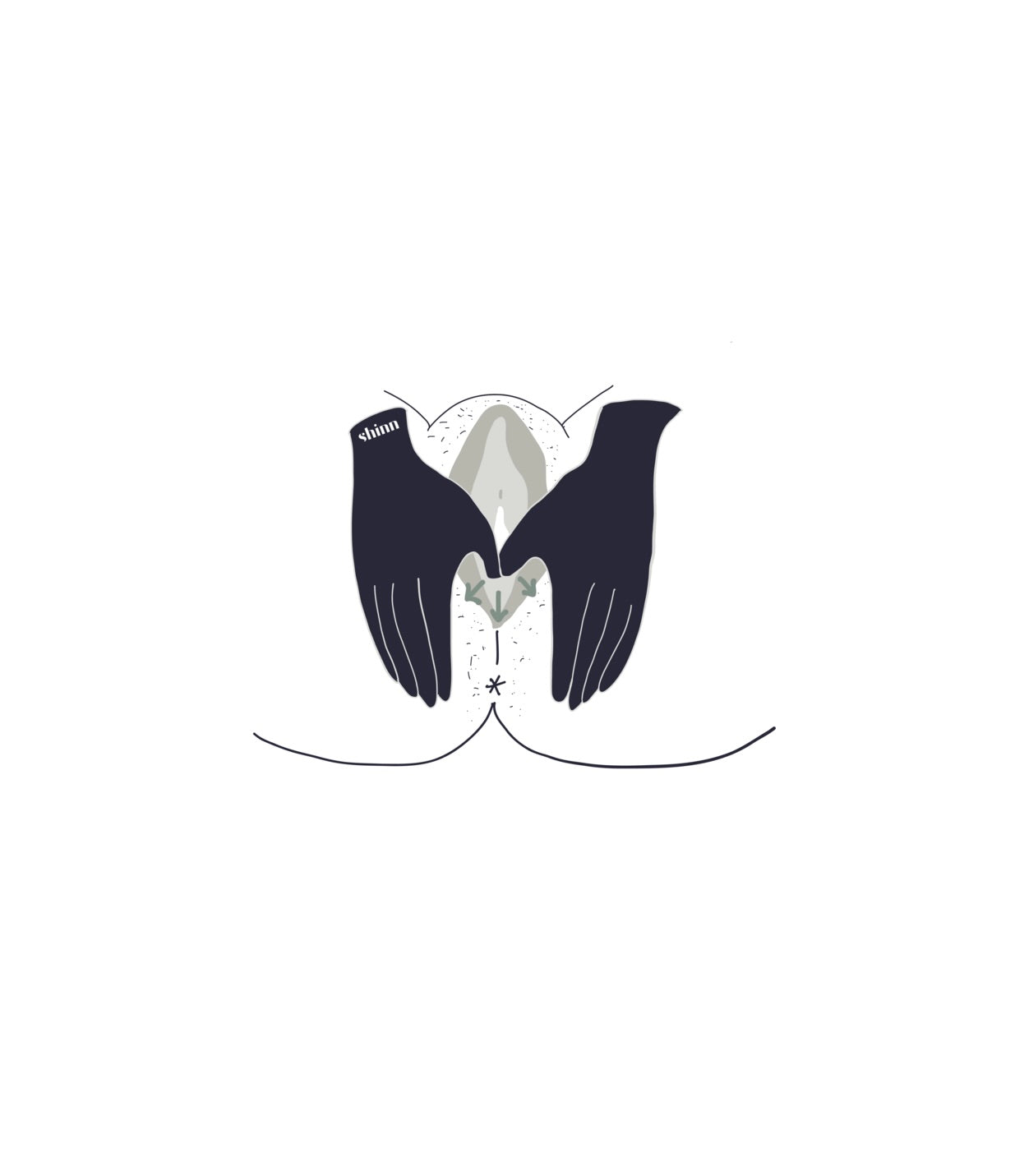
  2. Insert one or two fingers into the opening of the vagina.
  3. Apply downward pressure toward the perineum. This will create a sensation of pressure and stretching. This is normal, but it may not always be comfortable. Take it slow and don’t overdo it. It will get easier every day.
  4. Stretch downward and backward for 30 seconds. Gradually increase this by another 30 seconds until you reach 1 minute. After that, continue stretching for 1 minute every day.
  5. Stretch toward the lower left side for 30 seconds. Gradually increase this by another 30 seconds until you reach 1 minute. After that, continue stretching for 1 minute every day.
  6. Stretch toward the lower right for 30 seconds. Gradually increase this to another 30 seconds. After that, continue stretching for 1 minute every day.
  7. Do this every day, or even twice a day.
  8. You can wipe off the excess oil, but be sure to let some of it absorb so that your skin is well-nourished. This helps improve your skin’s elasticity.

In the final weeks of your pregnancy, that little belly can sometimes get in the way, of course. If you find it too tiring or have trouble getting into the right position, ask your partner for help.


Need more help?

If you need visual guidance, be sure to check out the Motel Mama website (https://motelmama.be/perineummassage-zwanger/) or watch their video here (https://www.youtube.com/watch?v=8lc8n2KSlmg). You can also find more information about perineal massage in Hedwig Neels’ Het Bekkenbodenboek (https://www.lannoo.be/nl/het-bekkenbodemboek) (https://en.thepelvicfloor.be/).


Sources

  • Beckmann MM, Stock OM. Antenatal perineal massage for reducing perineal trauma.Cochrane Database of Systematic Reviews. 2013;(4):CD005123. Published April 30, 2013. doi:10.1002/14651858.CD005123.pub3
  • Chen, Q., et al., Effect of Prenatal Perineal Massage on Postpartum Perineal Injury and Postpartum Complications: A Meta-Analysis. Comput Math Methods Med, 2022. 2022: p. 3315638; Silva, A.P., et al., Perineal Massage Improves Dyspareunia Caused by Tenderness of the Pelvic Floor Muscles. Rev Bras Ginecol Obstet, 2017. 39(1): p. 26-30; Montenegro, M.L., et al., Thiele massage as a therapeutic option for women with chronic pelvic pain caused by tenderness of pelvic floor muscles. J Eval Clin Pract, 2010. 16(5): pp. 981–2; Abdelhakim, A.M., et al., Benefits of antenatal perineal massage in reducing perineal trauma and postpartum morbidities: a systematic review and meta-analysis of randomized controlled trials. Int Urogynecol J, 2020. 31(9): pp. 1735–1745.
  • Goh R, Goh D, Ellepola H. Perineal tears - A review.Aust J Gen Pract. 2018;47(1-2):35-38. doi:10.31128/AFP-09-17-4333
  • Neels, H., The Pelvic Floor Book. 2021 , 174 (73).