Shopping Cart
0
Selected especially for you:



Pain during sex is more common than people realize. Yet many women continue to put up with it, either out of embarrassment or because they think it’s “just part of it.” The medical term for pain during sex is dyspareunia. It refers to persistent or recurring pain before, during, or after vaginal penetration.
Important to know: You don't have to just accept pain during sex. The pain is a signal from your body, and there are several scientifically proven ways to address the cause.
Research shows that 10 to 20% of women experience pain during intercourse at some point in their lives. During menopause, this percentage rises to more than 50%, primarily due to hormonal changes that affect vaginal health.1,2
Painful intercourse rarely has a single cause. It is often the result of a combination of physical, hormonal, and psychological factors.
Vaginal dryness is one of the most common causes of pain during intercourse. A decrease in estrogen—for example, during menopause, while breastfeeding, or as a result of certain hormonal treatments—can cause the vaginal lining to become thinner, drier, and more sensitive.3
This can lead to:
In women during and after menopause, vaginal dryness can be part of the genitourinary syndrome of menopause, abbreviated as GSM. This includes both vaginal and urinary symptoms, such as dryness, pain during intercourse, itching, irritation, and a more frequent urge to urinate.4
Recurrent infections, an altered vaginal microbiome, or skin conditions such as lichen sclerosus can make the intimate area more sensitive. As a result, touch or penetration can become painful.
An overactive or tense pelvic floor can make penetration difficult or painful. This tension sometimes develops unconsciously, for example, after previous experiences of pain, stress, childbirth, or out of fear that the pain will recur.
Fear of pain, stress, fatigue, or negative sexual experiences can intensify or perpetuate pain. That doesn’t mean the pain is “all in your head”: physical tension, emotions, and pain influence one another.
Pain can create a vicious cycle: when you expect pain, you may unconsciously tense your pelvic floor. This can make penetration more difficult and painful, which in turn increases your fear of the next time.
The right approach depends on the cause. Sometimes simple, non-hormonal measures can help. If the pain is persistent, severe, or unexplained, it is important to consult a doctor or gynecologist.
If you experience pain due to vaginal dryness, a lubricant can be an important first step. A lubricant reduces friction during sex and can thus provide immediate relief.4,5
A suitable lubricant:
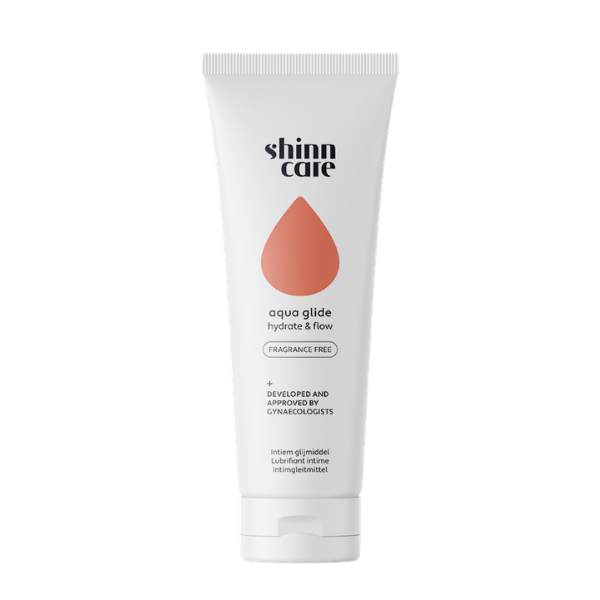
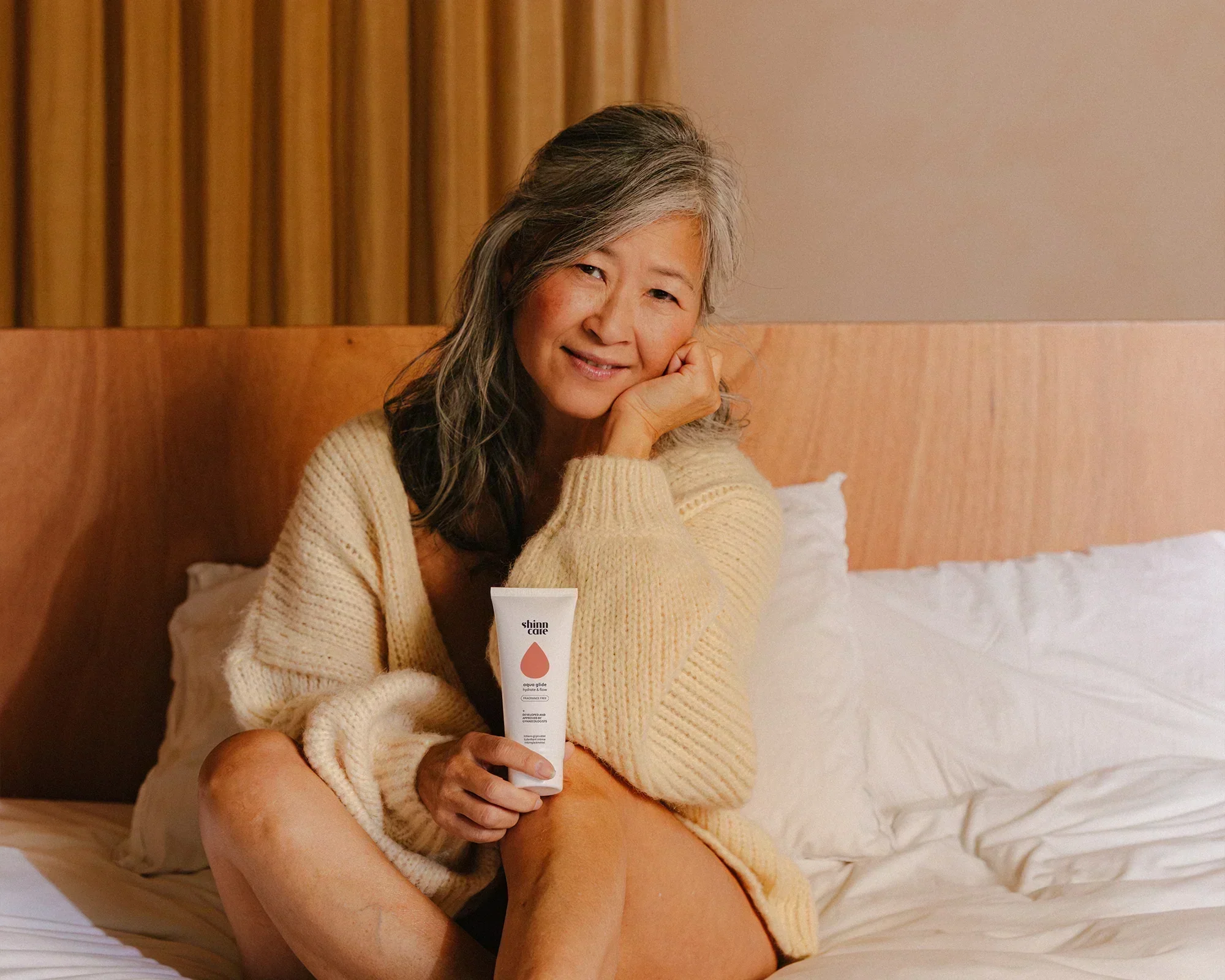
Aqua Glide Shinncare 's is a long-lasting, water-based lubricant designed for women who want to take extra care of their sensitive intimate area.
The formula contains ectoine and sodium PCA to support hydration. " Aqua Glide " is free of fragrance, glycerin, glycols, sorbitol, and parabens, and has a pH level tailored to the intimate area. It can be used, among other things, for vaginal dryness, during menopause, postpartum, and while breastfeeding.
Not all water-based lubricants have the same composition. The table below shows how Aqua Glide differs from a traditional water-based lubricant. Always check the ingredient list and instructions for use for other products, as formulas vary by brand.
| Property | aqua glide | Classic water-based lubricant |
|---|---|---|
| Basic | Water-based | Water-based |
| Slip Capacity | Developed for long-term sliding and tested in vitro using controlled tribological simulations | It varies by formula; some formulas need to be reapplied more frequently |
| Moisturizing ingredients | Contains ectoine and sodium PCA | May contain moisturizing ingredients, but this varies by product |
| Sugar alcohols | Free of glycerin, glycols, and sorbitol | May contain one or more of these ingredients |
| Perfume | Fragrance-free | May contain perfume; check the list of ingredients |
| Intimate pH | Acidity adjusted to match the pH of the intimate area | The pH varies by formula and is not always clearly stated |
| Sensitive intimate area | Dermatologically tested on sensitive skin | Suitability for sensitive skin varies by product |
| Use During Pregnancy and Breastfeeding | Safe to use during pregnancy and while breastfeeding | Follow the manufacturer's instructions |
| Condoms and sex toys | Compatible with latex condoms and silicone sex toys | Compatibility must be checked for each product |
“Classic water-based lubricant” refers here to common product formulas and not to every lubricant on the market. The exact properties vary by brand and product.
A lubricant is used during intimate contact and works immediately. In cases of persistent dryness, a daily care product that moisturizes and helps protect the external intimate skin may also be recommended.
So, a lubricant and a daily intimate care product don’t serve exactly the same purpose and can complement each other.
When muscle tension is a factor, working with a specialized pelvic floor physical therapist can help. You’ll learn to consciously feel your pelvic floor, relax it, and rebuild your confidence.
If you experience severe symptoms during or after menopause, a doctor may consider prescribing local estrogen therapy. This can help restore the vaginal lining and reduce dryness and pain. This treatment is always prescribed for medical reasons and administered under medical supervision.4
Talking about pain—with your partner and with a healthcare provider—can relieve some of the pressure and help prevent you from putting up with your symptoms for too long. Take your time, don’t push yourself, and stop if something hurts.
Have pain during sex medically evaluated if:
Remember: intimacy isn't something you have to grit your teeth and endure. Pain deserves attention, regardless of your age or stage of life.
Painful intercourse is neither a taboo nor an inevitable fate. It’s a signal from your body that deserves attention. With the right knowledge, an appropriate lubricant, proper care, and professional guidance, intimacy can become more comfortable again.
Would you like to learn more about a lubricant that was specifically developed with the sensitive intimate area in mind? Visit Aqua Glide .

In-house gynecologist at Shinncare