Why get a perineal massage during pregnancy?
The perineum is the area between the vagina and the anus. During a vaginal delivery, this tissue is subjected to intense stretching as your baby’s head emerges.
With perineal massage, you gradually massage and stretch this area during the final weeks of pregnancy. This helps the tissue get used to the sensation of pressure and stretching.
Research on prenatal perineal massage shows that regular massage during the final weeks of pregnancy may reduce the risk of perineal trauma requiring stitches and the need for an episiotomy. This effect was particularly evident among women who had not previously given birth vaginally.
Why use oil for perineal massage?
During a perineal massage, it is important to use enough lubrication to avoid unnecessary friction on the sensitive skin.
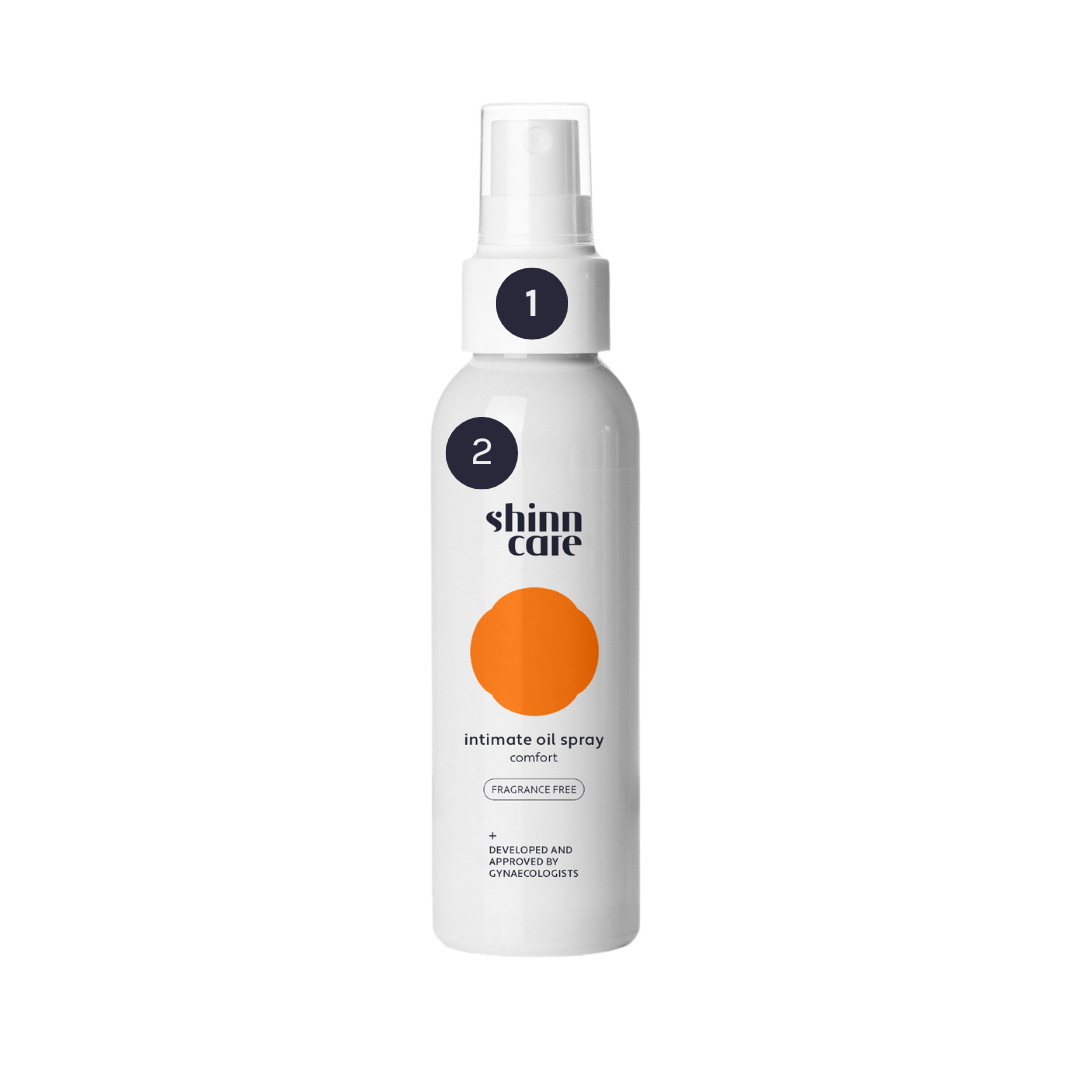
The Shinncare Peri Oil Spray:
- ensures smooth gliding during the massage
- helps keep the skin of the perineum supple
- promotes skin elasticity
- is fragrance-free
- is safe to use during pregnancy
- is easy and hygienic to apply thanks to the (upside-down) spray
That way, you can focus on the massage itself without having to constantly reapply oil.
When should you start perineal massage?
You can use the Shinncare Peri Oil Spray starting at 34 weeks of pregnancy.
Perineal massage is usually performed during the final weeks before childbirth. Consistency is more important than massaging every day: even a few massages a week can be beneficial.
Choose a quiet moment when you have plenty of time. After a warm shower or a warm bath, the tissue often feels softer and more relaxed.
How do you perform a perineal massage?
1. Wash your hands
Make sure your hands are clean and your nails are short. Empty your bladder beforehand and get into a comfortable position.
2. Apply the " Peri Oil Spray "
Spray a small amount of oil on your fingers and on the perineum.
3. Gently bring your thumbs inward
Insert one or both thumbs a few centimeters into the vagina.
4. Massage downward and to the side
Gently press downward toward the anus and then to both sides. You may feel a slight stretch or a burning sensation.
The massage may feel sensitive, but it shouldn't hurt.
5. Massage for a few minutes
Gently repeat the movement for a few minutes. You can do the massage yourself or ask your partner to help.
How often do you do perineal massage?
You don't need to massage your perineum every day.
Starting around week 34, it’s usually recommended to repeat the massage several times a week. According to research, even one or two massages a week can have benefits.
The most important thing is to perform the massage gently and never use force.
Can perineal massage prevent tearing?
Perineal massage cannot guarantee that you won't tear or that an episiotomy won't be necessary.
Scientific research does show that prenatal perineal massage can reduce the risk of perineal trauma requiring stitches and the risk of an episiotomy. The demonstrated effect on episiotomy was particularly evident among women who had not previously given birth vaginally.
Peri Oil Spray itself does not prevent tearing: the oil helps facilitate perineal massage by reducing friction and keeping the tissue supple and elastic.
Can my partner perform the perineal massage?
Yes. You can perform perineal massage yourself or have your partner do it for you.
Discuss beforehand how much pressure feels comfortable, and build up the massage gradually. The massage should provide a noticeable stretch, but it should not be painful.
When should you avoid perineal massage?
Do not perform a perineal massage if you suspect your water has broken or if you have a vaginal infection, herpes, or any other infection.
Are you at increased risk during your pregnancy, unsure whether perineal massage is right for you, or experiencing pain or bleeding? If so, please discuss this with your midwife, gynecologist, or doctor first.
Can I still use the Peri Oil Spray after giving birth?
Yes. The Peri Oil Spray can also be used after childbirth to care for the perineal skin and, later on, for scar massage following, for example, a tear or an episiotomy, once the tissue has healed sufficiently.
If you're unsure, ask your midwife or doctor when you can start scar massage.